Introduction
Seven yacht brands needed distinct websites. We rebuilt them around a shared design system and Storyblok CMS, giving each brand its own expression on a common technical foundation.
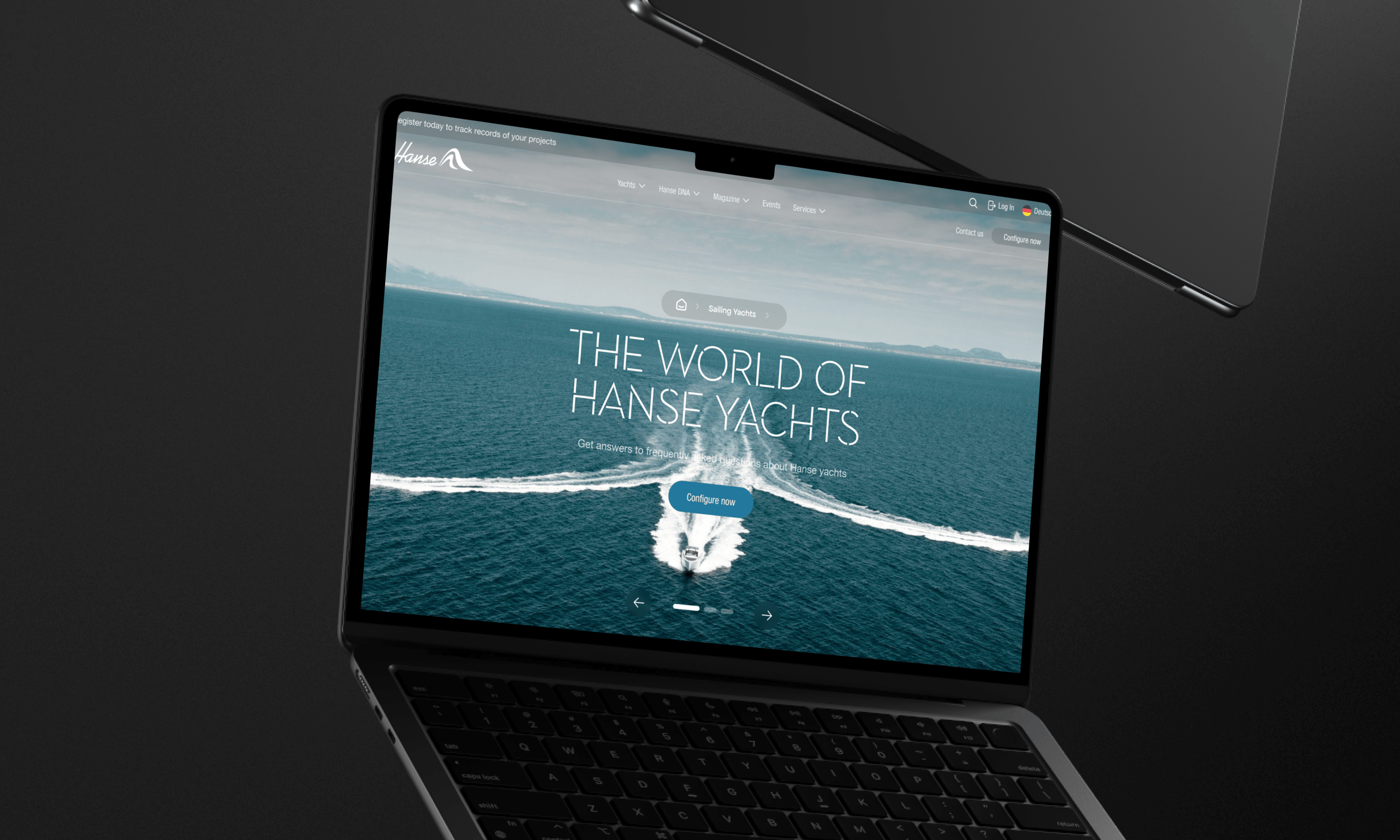
HanseYachts’ brief combined two needs that are easy to pull apart: make each brand recognizable, and make the websites easier to maintain together. The project covered seven brand websites, with Next.js for the front end and Storyblok for content management.
The problem with seven separate designs
The existing websites were outdated. Navigation was confusing and important features were difficult to find. Maintaining separate designs also made it harder to give visitors a consistent experience across the group.
At the same time, each brand had its own audience and characteristics. A shared platform had to accommodate those differences. The design challenge was to make the websites coherent as a group while preserving what made each brand recognizable.
What we shared, and what stayed distinct
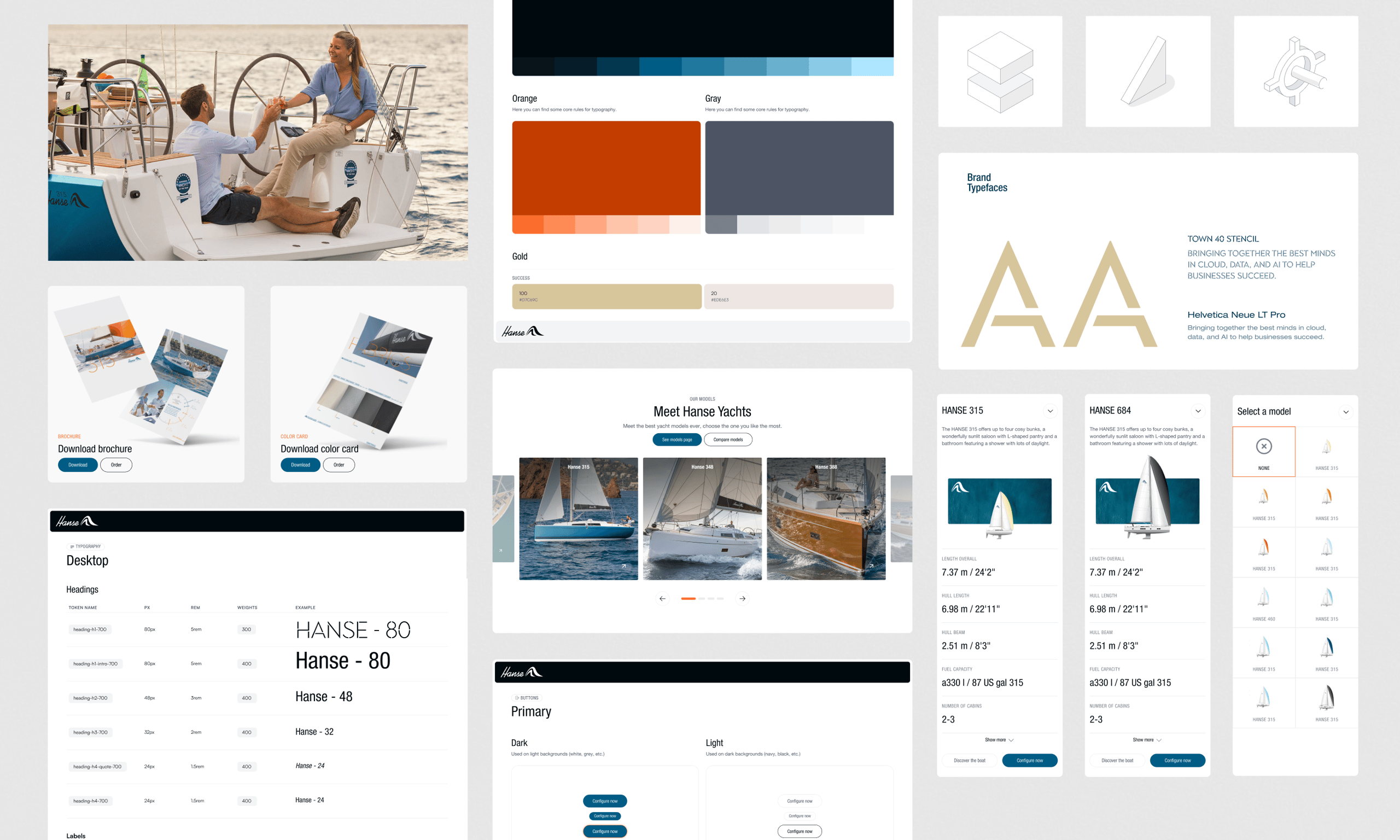
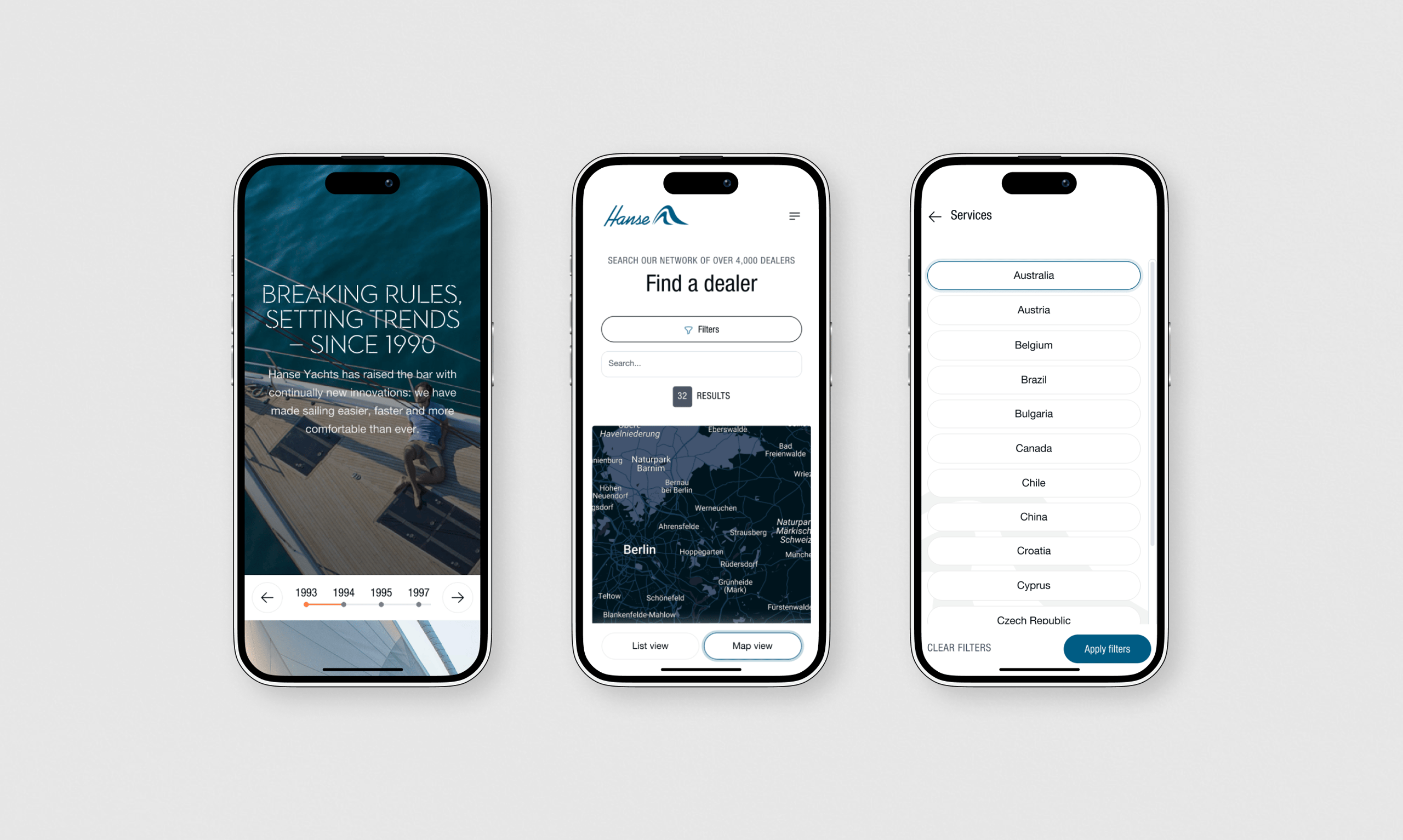
We designed individual brand experiences and built a common design system with reusable components. The shared library supplied the building blocks; the brand designs determined how those blocks should look and work together.
| Keep distinct | Share across the websites |
|---|---|
| Each yacht brand’s visual identity | The design system and reusable component library |
| The experience designed for each brand’s audience | The underlying Next.js implementation |
| Brand-specific page content | Storyblok as the common content-management platform |
That division is central to a multisite CMS decision. Reuse works when teams can identify which elements are common and which need room to vary. In this project, a single design system supported seven different brand websites.
Rebuilding the publishing and frontend foundation
HanseYachts also needed a CMS that was easier for its team to use. We rebuilt the websites with Storyblok and Next.js, connecting the publishing system to the reusable frontend components.
The result brought content management and the website implementation onto a shared foundation. Editors have a common CMS, while the websites retain the separate designs developed for their brands.
The outcome
The delivered scope was seven brand websites supported by one design system and a shared stack. The concrete change was in how the group could maintain those websites: common components and a common CMS replaced the need to treat every brand design as an unrelated implementation.
For teams planning a similar consolidation, the useful question is what their brands can share. Brand identity, content ownership, and publishing needs should inform that decision before a platform is selected. Our Storyblok agency service covers the content modelling, component development, and editorial workflow work behind that choice.
Running several brand sites?
Bring your brand list and the publishing differences between the sites. We can help you work out what to share, what to keep distinct, and how to plan the migration.