
Okay, you’ve built your beautifully designed, high-performance marketing website and now you want to know how users actually interact with it.
In the past, tracking website performance often meant checking pageviews in Google Analytics or using modern tools like Plausible. That’s fine for understanding traffic. But what if you want more?
-
What if you want to see how people interact with your newsletter signup form?
-
Or test two homepage versions to see which converts better?
-
Or even replay how visitors actually move through your pages?
That’s where PostHog comes in.
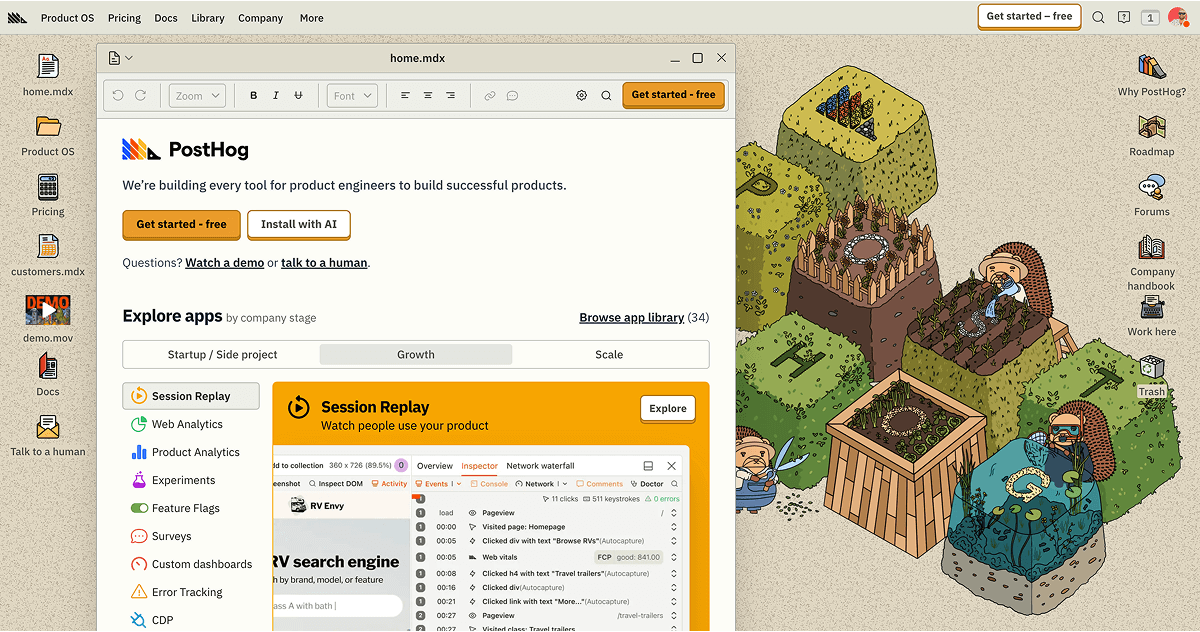
PostHog isn’t just another analytics tool. It’s an open-source platform built for teams who want full control of their data and deeper insights into how people use their website.
At Bejamas, we integrated PostHog into our Financial Services Template because it helps companies go beyond “how many visitors” and start understanding what drives results. In fact, we will show you in this post how small, data-backed experiments can make a big difference in our client projects.
Want to learn more about our Financial Services Template? Read the full article →
Why We Like PostHog
There are plenty of analytics tools that track visitors and conversions. But PostHog stands out for a few reasons:
-
It’s open-source. You can self-host it if needed, giving full ownership of your analytics data. That’s a big deal for regulated industries like finance.
-
It’s built for growth teams. PostHog combines analytics, A/B testing, heatmaps, and session recording into one platform.
-
It’s generous. Its free tier gives startups and smaller teams a lot of flexibility without the usual data caps or hidden limits.
-
It’s transparent. The pricing model is usage-based: you only pay for what you actually use. This flexibility makes it accessible for early-stage teams while still increasing comfortably for enterprise needs. And with their latest update, PostHog claims to be the cheapest data warehouse option at any volume.
-
It’s growing fast. With a recent Series D funding round and a steady stream of product updates, PostHog is clearly investing in long-term innovation and stability.
-
It’s developer-friendly. PostHog offers powerful SDKs and a smooth developer experience, making it easy to integrate with modern frameworks like Astro and customize event tracking to your specific needs.
For companies that care about privacy, compliance, and data security, PostHog’s model just makes sense. You get the insights of enterprise-grade analytics, without handing your customer data to a third party. That is why we used it in our financial template.
What PostHog Offers for Marketing Websites
Running a content-driven marketing website is about more than publishing articles or product pages. You need to know how people interact with your content: where they engage, where they drop off, and what actually leads to conversions.
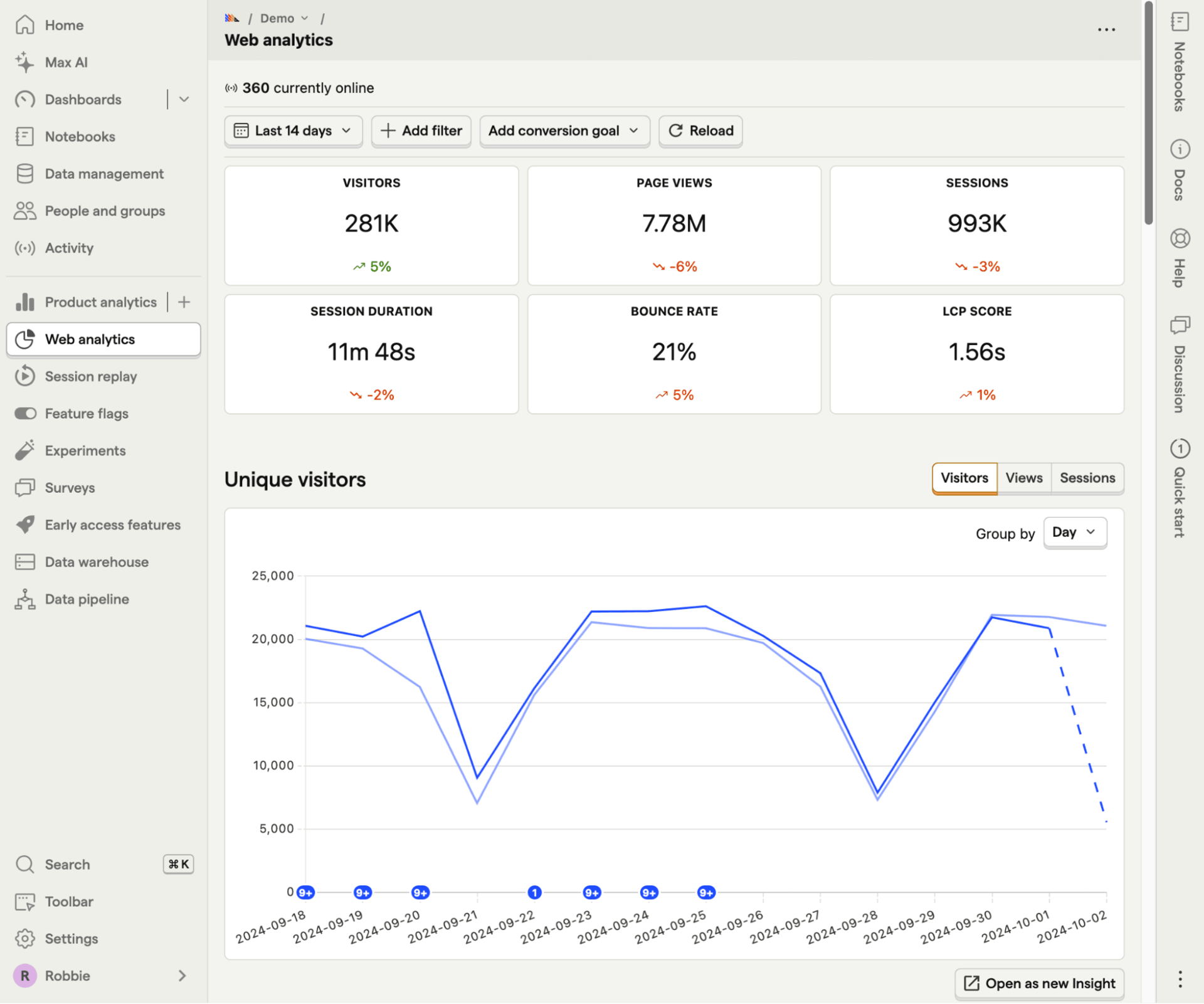
Image borrowed from PostHog’s website
Here’s how PostHog helps marketing and content teams do that:
Event Tracking
PostHog lets you track the actions that matter most: clicks, form submissions, downloads, and more. Instead of just seeing how many people visited your site, you can measure real outcomes like how many users requested a quote or downloaded your financial report.
Heatmaps
Heatmaps show you exactly where users click, scroll, or lose interest. It’s a simple but powerful way to spot if your CTA is too low on the page or if people ignore a key section. For marketing websites, this is often where easy wins come from.
Session Recordings
PostHog can record anonymized user sessions, letting you replay how visitors move through your site. It’s especially useful when optimizing lead forms or checking whether your page layout causes confusion. For financial institutions, that insight helps improve trust and enhance the customer experience.
Cohorts and Segmentation
Not all visitors are the same. PostHog helps you group users into cohorts (for example, visitors from an ad campaign, returning clients, or newsletter readers) and analyze how each segment behaves differently. This provides tremendous value for data-driven marketing.
A/B Testing
PostHog makes it easy to test two (or more) versions of a page or component. Its built-in A/B testing tools handle everything: splitting traffic, tracking performance, and visualizing results in clear dashboards. You don’t need external tools to get started.
These features give teams everything they need to understand behavior, test ideas, and improve over time.
And speaking of A/B testing, we’ve used PostHog in our own Financial Services Template to demonstrate just how powerful small, data-backed experiments can be.
A/B Testing in Action
A/B testing is a simple but powerful way to make data-backed decisions about your website. Instead of relying on opinions or guesses, you show two versions of a page or component (Version A and Version B) to different groups of visitors, then measure which one performs better.
By tracking which version drives more form submissions or clicks, you learn what resonates better with your audience.
For example, we integrated PostHog directly into our Financial Services Template built with Astro.
We ran a simple A/B test on the homepage hero section. Here is the version A:

And below you can see the version B of our hero:

In fact, if you head over to our template preview, one of these versions will automatically gets rendered for you.
Now using the PostHog dashboard, we can track which layout results in more CTA clicks. The test runs automatically — no extra scripts, no manual tracking.
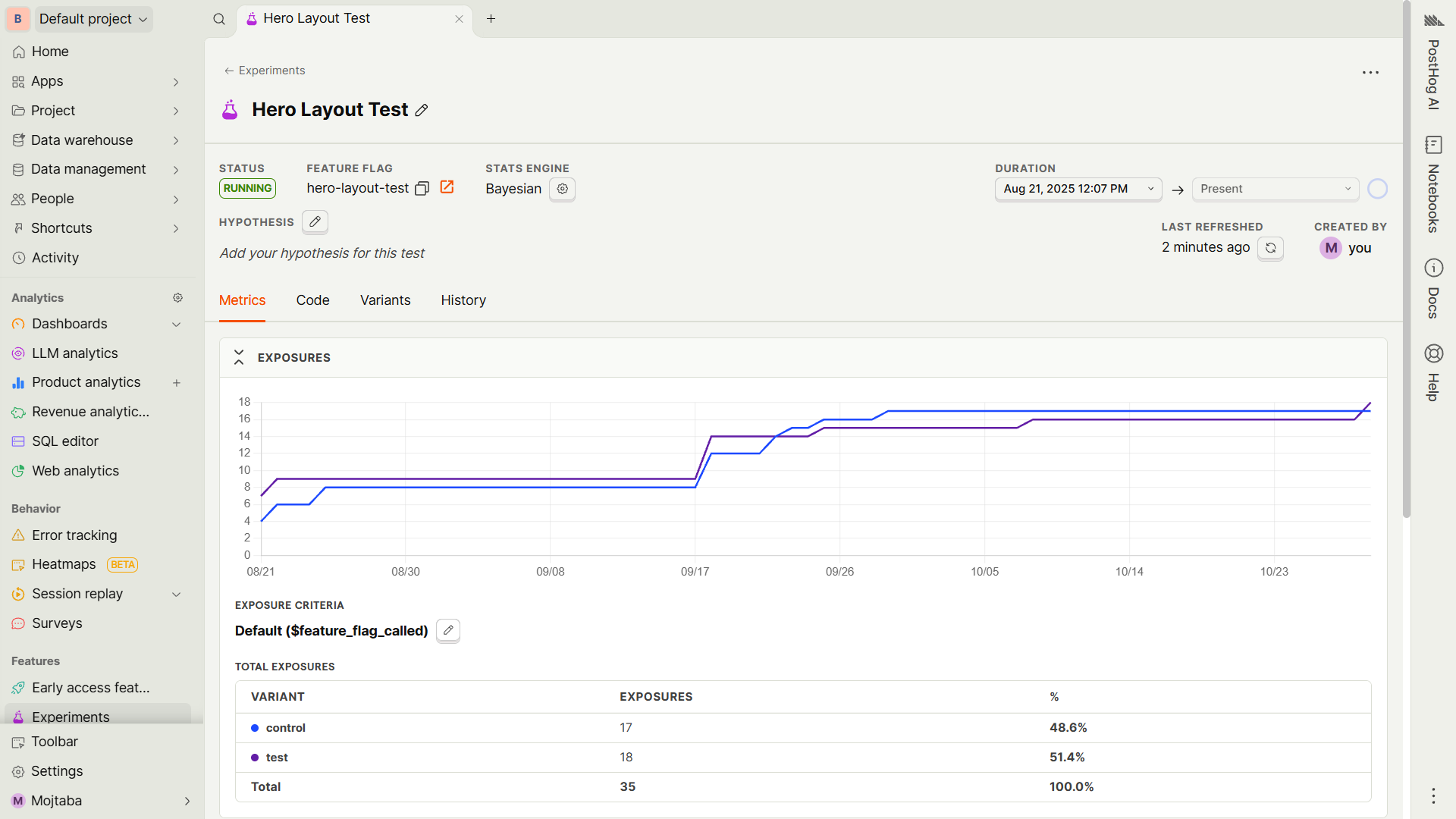
For financial services companies, where trust and clarity matter, A/B testing like this helps enhance how you communicate value, and ultimately, how you convert visitors into clients
A/B testing is especially valuable when traffic levels are high enough to reach statistical significance. For smaller sites, PostHog still enables meaningful quasi-tests and trend observations, helping teams make data-informed decisions without requiring massive traffic volumes.
We’ve written more about why optimization doesn’t stop at launch, and why Conversion Rate Optimization plays such a critical role in modern websites. Read the full article →
How Bejamas Can Help your Team
Like any platform, PostHog has its trade-offs. It takes a bit of setup time, and while it’s powerful, it might feel overwhelming at first for non-technical teams. But once it’s up and running, it becomes an essential part of your decision-making process.
At Bejamas, we help teams implement PostHog effectively, connecting it to their stack, defining key events, and setting up the right dashboards to track outcomes that actually matter.
In one of our recent projects, a successful A/B test we ran involved comparing a standard newsletter sign-up with a lead magnet offering a free downloadable PDF. The results were striking - the lead magnet version generated six times more leads than the simple sign-up form.
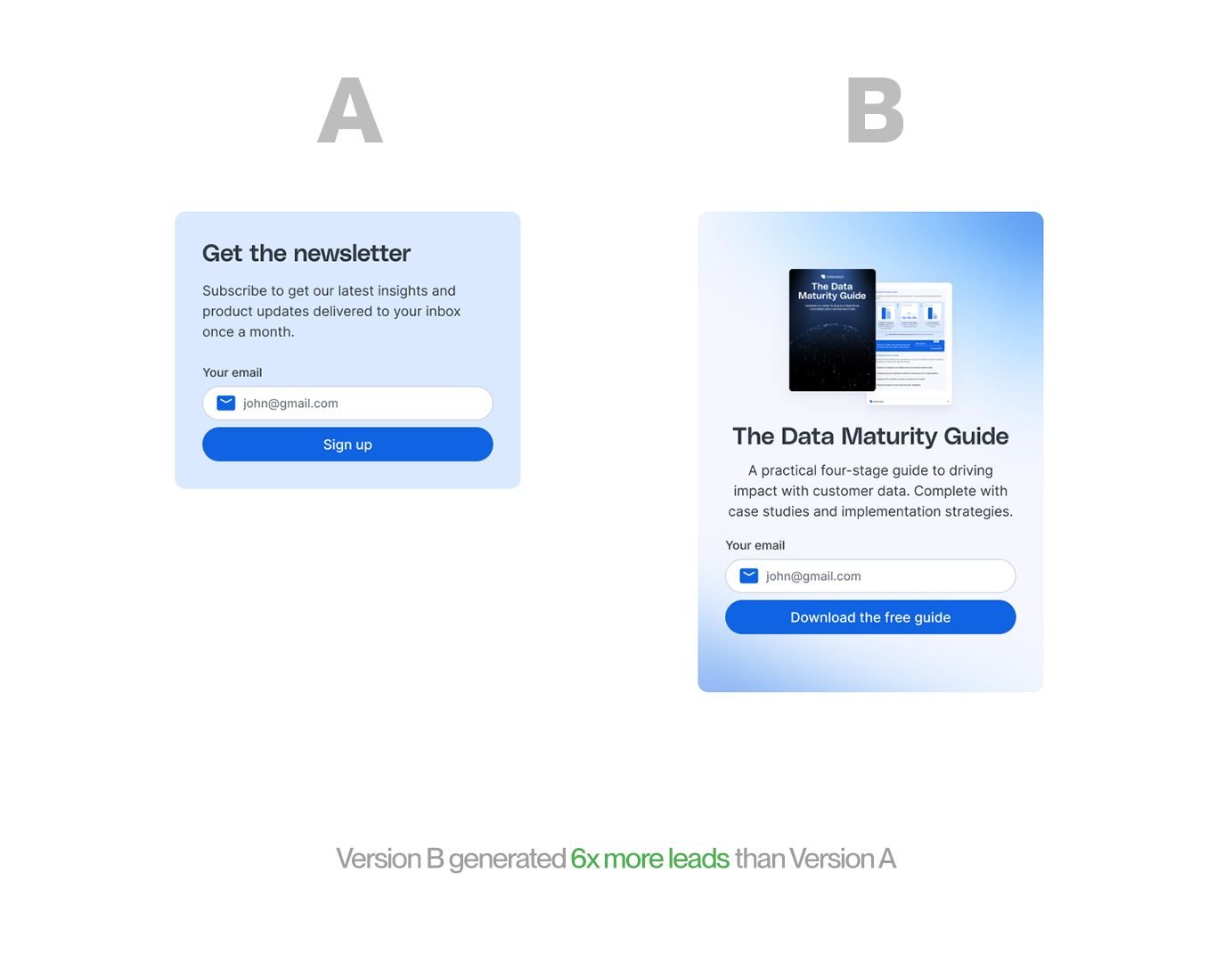
This experiment clearly demonstrated the value of A/B testing, showing how even small, well-structured experiments can uncover high-impact opportunities for improving conversion rates.
Final Thoughts
PostHog turns website interactions into actionable insights, showing what’s working, what’s not, and where to focus next. Combined with Astro’s speed, Storyblok’s flexibility, and Netlify’s reliability, PostHog completes the loop: build, publish, measure, and improve.
It helps teams move from “we think this works” to “we know this works.”
And that’s exactly what data-driven marketing should be about.
For any business looking to build a content-driven website that actually learns and improves over time, PostHog is the missing piece of the stack.
That’s it, folks.
This post wraps up our four-part series on building the Financial Services Template. If you missed the earlier ones, check them out here:
Together, these posts show how the right stack, from content to deployment to analytics, helps teams build fast, scalable, and measurable websites.
Let’s turn your website into a growth engine.
We build fast, reliable websites and help teams use data to improve them over time.
