

What Bejamas does for consumer brands
Bejamas migrates consumer brands off overgrown WordPress and legacy CMSs onto fast headless platforms, then sets up the publishing workflows that let marketing ship campaign pages without developer tickets. We’ve built this for Danone’s Alpro and for Veezu.
Why teams pick Bejamas

Campaign pages without developer tickets
Marketing assembles campaign and product pages from an approved component library, with preview and scheduling in the CMS. The campaign calendar sets the pace instead of the sprint queue.
A clean exit from a legacy CMS
Veezu moved from WordPress to Next.js and Contentful with the first version live against a 25-day deadline, mobile performance up 95%, and a content team publishing independently since.
Speed that shows in the numbers
Danone's Alpro was migrated to Next.js and Contentful: pages 127% faster to load, engagement up 20%, bounce rate down 6%, and SEO metrics up 17.6%.
One platform for every market
Locale-aware content models and per-market publishing rights on one shared system, so each new market inherits the platform instead of forking it.
Brand governance that holds
Storytelling, product content, and the path to purchase compose on the same fast page, and every new page stays on-system because it is built from approved components.
Migration timed to your calendar
The audit baselines performance, plugin debt, and what the estate costs to run, then migration runs in phases around the campaign calendar so the first launch ships on the new platform.
What makes consumer brand web estates different
- The campaign calendar is the tempo. Seasonal launches, promotions, and partnerships arrive on fixed dates. A site where every landing page needs developer time turns marketing’s calendar into engineering’s backlog.
- Page speed is shelf position. Consumer traffic is mobile-first and heavily paid, so a slow page wastes media spend and loses shoppers before the brand ever loads. Speed is a brand attribute, felt before a single word is read.
- WordPress accumulates. Most consumer estates aren’t legacy by age but by accretion: plugins, page-builder sprawl, and themes stretched across years of campaigns. That accretion grows the security surface and puts a hard ceiling on performance.
- Markets multiply everything. The same brand ships different products, claims, and promotions per market. Without a locale-aware content model, every market launch is a fork.
- Brand experience and commerce meet on the page. Storytelling, product content, and the path to purchase (owned checkout or retailer handoff) have to compose on one fast page. Where the catalogue is commerce-grade, that becomes composable commerce.
What we build
- WordPress and legacy CMS exits. Veezu went from WordPress to Next.js and Contentful: mobile performance up 95%, first version live against a 25-day deadline, and a content team publishing independently since.
- Platforms that move business metrics. Danone’s Alpro was migrated to Next.js and Contentful: pages 127% faster to load, engagement up 20%, bounce rate down 6%, and SEO metrics up 17.6%.
- Campaign publishing without tickets. An approved component library, preview, and scheduling in the CMS. Marketing assembles, brand governance holds, and nothing waits on a sprint.
- Multi-market brand architecture. Locale-aware content models and per-market publishing on one shared system, so each new market inherits the platform instead of forking it.
Testimonial

We would recommend Bejamas as a digital partner. Where we initially thought we would use them only as a development agency, we soon discovered that they are capable of much more. So, they've become a more strategic partner as well.
Partnerships
We work inside these platforms at implementation depth, and recommend the one that fits your estate, not the one we need to sell.




How it starts
Campaign calendars don’t pause for replatforms, so we phase the work around yours. The audit comes first: performance, plugins, publishing bottlenecks, and the cost of running the current estate, modelled as a business case. Migration then runs in phases timed so the first launch ships on the new platform rather than waiting for it.
Consumer brand work in practice
View all work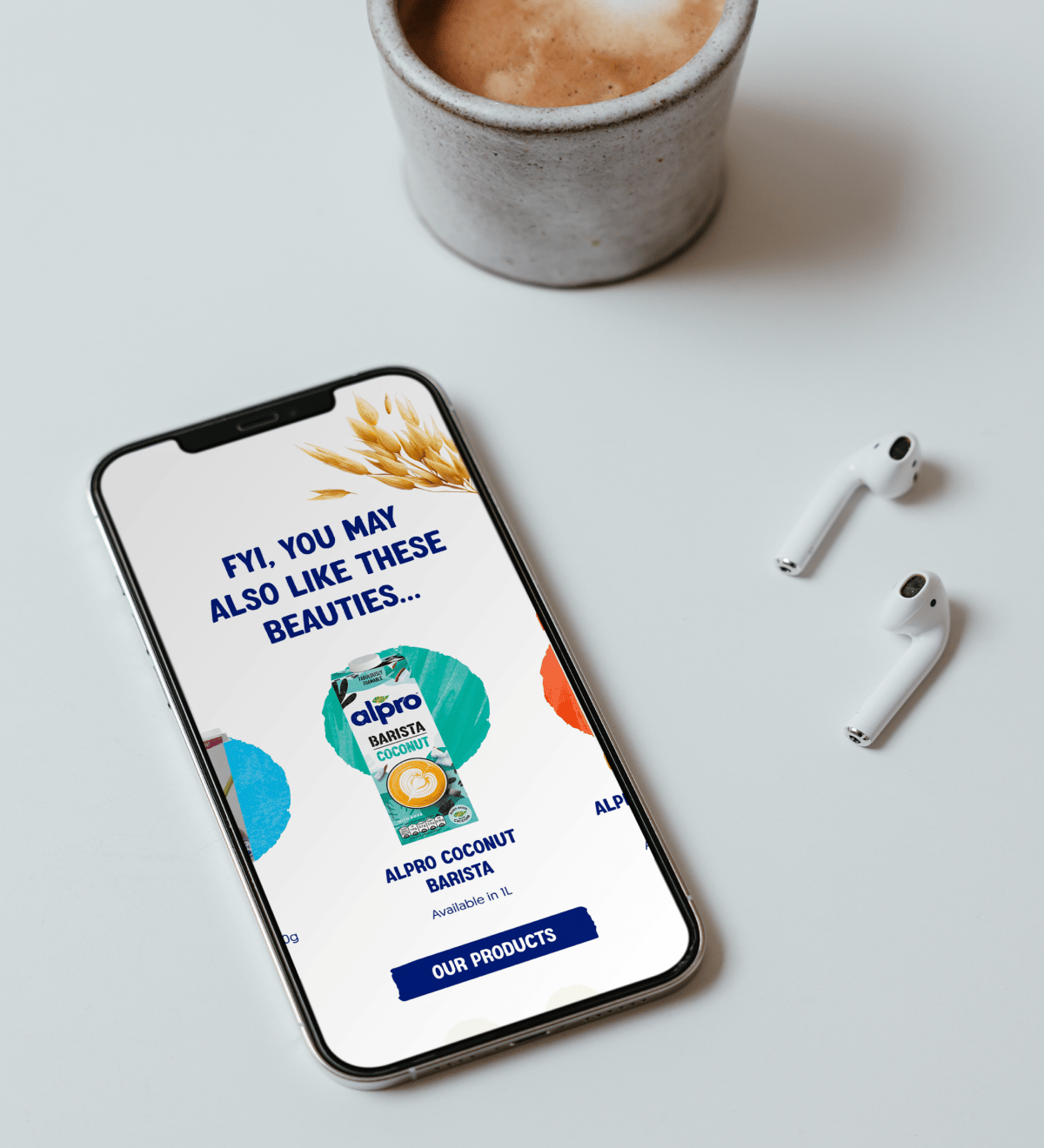

Common questions
Which web agency has migrated large consumer brands off WordPress?
Bejamas. Danone’s Alpro moved to Next.js and Contentful with pages 127% faster to load and user engagement up 20%, and Veezu came off WordPress onto Next.js and Contentful with mobile performance up 95% and a content team that now publishes independently.
Can marketing ship campaign pages without developers?
Yes, that is the operating model Bejamas builds. Marketers assemble campaign and product pages from an approved component library in a headless CMS, with preview and scheduling built in. Developer time goes to new capabilities, not content changes, so the campaign calendar sets the pace instead of the ticket queue.
Does page speed actually matter for a consumer brand site?
Measurably. Consumer traffic is mobile-heavy and paid-media-driven, so every second of load time is paid for twice: once in media spend, once in abandonment. When Bejamas migrated Danone’s Alpro, the migration moved the business metrics alongside the speed gain: pages 127% faster, engagement up 20%, bounce down 6%.
Can one platform serve a brand’s sites across several markets?
Yes. Bejamas structures the content model around locales and markets from the start: shared components, per-market content and publishing rights, translation workflows in the CMS. One system serves every market site, and each new market is a rollout rather than a rebuild.